
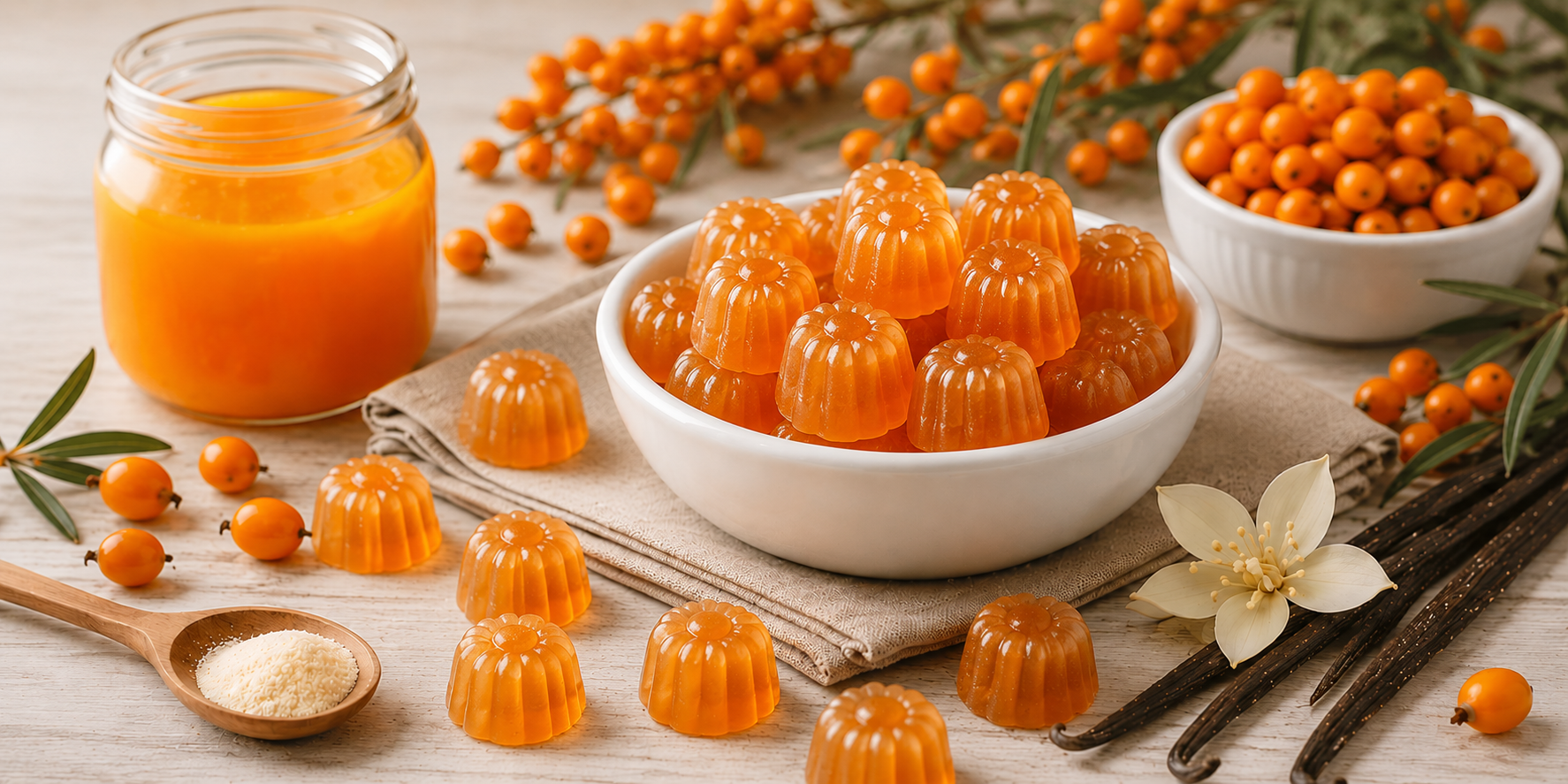
Experience the goodness of Sea Buckthorn in a delicious and convenient gummy form. Made with the nutrient-rich Sea Buckthorn berry, these gummies are packed with essential vitamins, antioxidants, and naturally occurring fatty acids that support your everyday wellness journey.
Sea Buckthorn is known as the “Golden Berry” for its exceptional nutritional profile and has been valued for centuries as a natural source of nourishment and vitality.
Why Choose Sea Buckthorn Gummies?
Sea Buckthorn Gummies offer an easy and enjoyable way to incorporate the benefits of this remarkable superfruit into your daily routine. Carefully formulated for modern lifestyles, they provide nutritional support in a tasty chewable format.
Key Benefits
Supports Immune Health
Rich in Vitamin C and antioxidants that help support the body’s natural immune defenses.
Promotes Healthy Skin
Contains naturally occurring Omega-7 fatty acids and antioxidants that help support healthy-looking skin.
Antioxidant Protection
Helps protect cells from oxidative stress caused by free radicals.
Supports Overall Wellness
Provides a blend of vitamins, minerals, and plant-based nutrients that contribute to everyday health.
Helps Maintain Energy & Vitality
Supports an active lifestyle with the goodness of nature’s nutrient-rich superfruit.
Delicious & Convenient
An easy-to-consume alternative to capsules, tablets, or syrups.
Nutritional Highlights
- Sea Buckthorn Fruit Extract
- Vitamin C
- Vitamin E
- Omega 3, 6, 7 & 9 Fatty Acids
- Natural Antioxidants
- Flavonoids & Carotenoids
The Power of the Golden Berry
Sea Buckthorn is one of the few natural sources that contains Omega-7 fatty acids along with a broad spectrum of vitamins and antioxidants. This unique nutritional combination makes it a valuable addition to a balanced lifestyle and daily wellness routine.
Perfect For
- Active Lifestyles
- Skin & Beauty Wellness
- Immune Support
- Health-Conscious Individuals
- Adults Seeking Convenient Nutrition
Daily Wellness with the Goodness of Sea Buckthorn
Disclaimer: This product is not intended to diagnose, treat, cure, or prevent any disease. It should be used as part of a balanced diet and healthy lifestyle.
Leave a Comment
Your email address will not be published. Required fields are marked *